12 March 2013

Taking Art-C to the next level....

A blog is an online diary to pen your thoughts, or so they say! But my blog was something more than that...
It was a way of showcasing my love of art forms, books and music....

And while I haven't exactly published something for a long long while, it was always on my mind to write something, to do the next thing when the time was right!
And that time is now...

In the last couple of months, I have tried to give shape to the myraid thoughts, dreams & plans that have plagued me since the last few years. Dreams of seeing myself doing more than just writing about art, but actually creating something artistic, sourcing rare and dying local art products, recycling things that we normally relegate to the bin, and inspiring people enough to keep all of it alive.

Upcycled Mobile Phone Holder made from Pet Bottle


Towards this endeavour, I have created a retail space on Facebook- ART-C, where all the products are showcased and sold. Do take the time to visit it with this link: https://www.facebook.com/art.charmaine

'Muted Sunset'- Hand-painted Sling Pouch from our 'Wearable Art' series


With this blog, I'll be doing a lot of different stuff, giving a peek into how different products can be handmade, the people the art is sourced from, why is recycling easy & how it can benefit you & your surroundings in the long run.

Quilling on Banana Fiber Boxes


Do subscribe to this blog, and feel free to get in touch with me for any queries, products or even ideas.

Thank You,
Charmaine

18 June 2010

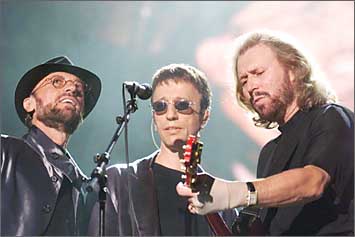
The Bee Gees.............STAYIN ALIVE with us forever!!!!!

Most of us born in the '70's & '80's have grown up listening to songs like 'Tragedy'...'Stayin alive'... 'How deep is your love'....They were sung by the Bee Gees, a musical group that was so very distinct, that even on trying hard, none of us could imitate the way they sung!!!!

The group comprised of 3 brothers, Barry, Robin & Maurice Gibb who together sang three part harmonies which covered the entire range of pitches & were instantly recognisable. Robin's clear vibrato was what stood out in the initial years & Barry's R&B falsetto became a signature sound during the disco years.
It was really rare to see the kind of camaraderie shared by the Beegees anywhere else but it must also have been this very fact that helped them co-write & sing some of the major hits in their 40 year career.

Born to English parents, the brothers began their singing career very young when they moved to Australia. On their subsequent return to the UK, they began their career in earnest & did well right from the start. They began by singing pop, later moving into love ballads, soul & disco. Being a contemporary of the Beatles, there was always competition but then they gradually managed to carve a niche of their own. Throughout all this, disco remained their forte. They performed in a lot of live shows, musical concerts & even composed for movies, selling almost 200 million records & becoming one of the best selling musical artists of all time.

This rock group were one of the few to stand apart in that they were almost never involved in controversies of any kind, unlike other bands of that era, be it drugs, women etc. Possibly this might be the reason for them never achieving the cult status of a band like the The Rolling stones or for that matter even the Beatles!!

Nevertheless the band's songs & music continue to live on, either for the youthfulness & vivacity they convey or for reasons entirely different as seen here ........ "Staying alive '77, with its beat of 103/min was found to be an ideal song to tune to while doing CPR....... a fact that emphasizes the impact of their music!!!!!

14 June 2010

Warli art.....a most vivid & engaging way of story telling!!!!

The common match-stick figure drawings that most of us have come across in craft exhibitions can be traced directly to the Indigenous people of Maharashtra, India, a fact that took me by surprise, since I thought it was a craft brought to the country from outside!!!!


Called as Warli art where the word 'Warli' means 'piece of land', these drawings are created by the varlis, a scheduled tribe who live in parts of Gujarat & Maharashtra. They are a very old tribe & have a lineage that can be dated back to the 10th century. They speak an unwritten language mingling various dialects & communicate mainly through their drawings which are simple yet unique, the only way of transmitting folklore to the general populace.


These rudimentary drawings, use a very basic graphic geometric vocabulary but with a sense of depth & meaning derived from nature. The circle represents the sun & the moon & the triangle, mountains & trees. Only the square seems to be invented, denoting a sacred enclosure or a piece of land which is the central motif in every ritual painting. It is called the cauk or chaukat wherein we find the Palaghata or Mother Goddess. Male gods weren't given much importance in this. The common scenes in these paintings were those of hunting, festivals & farming.


A unique feature of these paintings is that humans are represented by 2 triangles joined at the hip. The upper triangle being the trunk and the lower triangle the pelvis. Their precarious equilibrium symbolizes the balance of the universe, and of the couple, and has the practical and amusing advantage of animating the bodies.


The paintings were most often done on the inside walls of huts which were made of branches, earth & cow-dung & were reddish ochre in colour. The figures painted in white, were made of a mixture of rice paste & water with the help of bamboo sticks. Done mostly during marriages & festivals, these crude styled paintings were given a radical change by the Warli artist, Jivya Soma Mashe who pursued it artistically & is primarily responsible for a renewed interest in this art form as we see it today!!!!

09 June 2010

The Sitar....a soulful musical instrument that needs no introduction!!!!


An instrument that was predominantly Indian, but gained huge popularity in the West due to the Beatles & Pandit Ravi Shankar, is the Sitar....George Harrison infact used it for the first time in pop music in the song, "Norwegian Wood (This Bird has flown) " on the LP Rubber Soul in 1965.

Used mostly in Indian classical music, its versatility has been known to encompass any & every musical genre. The origins of the sitar are very vague with some saying that it was developed in the 13th Century by Amir Khusro from the Tritantri Veena, a member of the Veena family. Others say that it might even have been developed during the time of the Moghuls & based on the persian lutes.

It is basically a stringed instrument which derives its sound from sympathetic strings, a long hollow neck & a resonating chamber resembling a gourd. The sitar's curved frets are movable, allowing fine tuning & raised so that the strings (tarb) can run underneath them. A sitar can have 17 to 22 strings, among which 6/7 played strings run over the frets. The Gandhaar-pancham sitar (used by Ustad vilayat Khan) has 6 playable strings & the Kharaj-pancham sitar (used by Pandit R Shankar) has 7 playable strings. 3 of these playable strings (called the chikaari) just provide the drone & the rest are used to play the melody.

The gourd part of the instrument has 2 bridges & the timbre of the music results from the way the strings interact with the wide sloping bridge creating a distinct tone. The maintenance of this specific tone by shaping the bridge is called jawari. A metallic plectrum, called mizraab is used to produce music & the instrument is played by balancing it between the player's left foot & right knee & never carried around, unlike other musical instruments. Materials like teakwood are used to make the neck & the tabli whereas the instrument's bridges are made from deer horn, ebony or camel bone.

The sitar has been used for a variety of songs & music & became very popular in the '70's even finding its way into films & albums. This was because of the newness of the sound & its ability to merge into any style, as a lead in a song or a part of the background score. Its soulfulness gave it a versatility that was widely accepted & although the craze for the instrument has mostly died down,  it continues to enrich the the legacy & traditions of classical music in India!!!!

08 June 2010

An imaginary world created by a brilliant author to which I am still hooked!!!!

Something that this author would never have thought of, is that so many years after his death, his name would be associated with one of the greatest movies of all times.....
If you are wondering whom I am talking about, it is the author, J.R.R Tolkien, a man whom I have come to admire & respect, not only for just giving us the story of  'Lord of the Rings' but for the detailing & vision so deep that I was amazed by it while viewing the movie!! I may never even leave the book till I devour it completely......

Am sure that many would argue with me that there were other great authors, which is definitely true but for me, knowing the man & his simplicity, it seems unbelievable that he would conjure up a tale so vivid to enrapture people of all ages so completely.

J.R.R Tolkein (1892- 1973), called the 'Father of modern fantasy literature', was an English writer & university professor who was brought up in Birmingham, England. He lost his parents at a young age & was brought up by the church. He was very fond of botany & would roam the local hills & countrysides exploring England, scenes of which were depicted in his books. He was also interested in painting & learning new languages, an interest that helped him invent completely new languages for his fantasy stories!!!

A contemporary of C.S.Lewis (Chronicles of Narnia), Tolkien studied at the prestigious Oxford University & joined the army on completion. He fought the WW1 but was greviously injured during it because of which he returned back to England & began work as a lecturer & translator. At the same time, he started writing his books & stories. In 1936, his book "Beowulf: The Monsters and the Critics" had an acclaimed opening not only for the content but also for the way it was portrayed. As one of his student says, 'When he spoke, it was the voice of Gandalf'.

He wrote a number of articles & books throughout his life, most notable of them being the 'Lord of the Rings' series & 'The Hobbit' & these together with tales, poems, essays & other fictional histories and invented languages, depicted an imaginary world called Arda & Middle Earth.

His literary works brought him a whole lot of accolades & citations throughout his life & although he won fame, he was quite uncomfortable with it all & till the end remained a simple unassuming man who am quite sure was unaware of his impact on people all over the world!!!

28 May 2010

An amazing use of discarded materials.....a different perspective on art!!!!

In keeping with today’s topic which I seem to be very taken up with, I came across some more installation works online by contemporary artists, who stretch the boundaries of their creativity.


One such artist, is the Indiana based Japanese artist Sayaka Ganz, a young girl who creates sculptures & artworks using discarded & used materials like plastic, metals & utensils like spoons & forks. These sculptures are not randomnly done but depict forms, mostly animals in various stages of movements, giving you the feeling of them being alive…

As the artist says, the used materials because of the human story behind them, have a life of their own & transcend their origins by being integrated into an animal form. She also goes to say that by creating the sculptures, it is her way to depict that even though there is a whole lot of conflict all round, all of the pieces fit together to form a cohesive whole, that every person will eventually find some place to belong to even if they aren’t sure when.

The sculptures are beautiful & being made with pre-defined forms gives them a uniqueness that is hard to define. What a depth of thinking & creativity for someone so young of age!!

More images of her works can be found at her website: www.sayakaganz.com

A urinal................The most influential art of the 20th century!!!!!

This is one artist I don’t think many of us have heard of, but take a look at the kind of art he created!!!


Called as ‘The Fountain’, this piece of installation art was created by the artist Marcel Duchamp in the year 1917. He called it as ‘readymades’ or found art since he made use of an already exisiting object & affixed his signature to it, giving it credibility in the name of art.

To understand the work, it is important to understand the artist behind the work. Marcel Duchamp (1887-1968) came to the US from France & became a part of the Dada movement, an anti-art cultural movement. He wasn’t satisfied with just being an artist & didn’t want to be a part of any art camp. This prompted him to express his creative abilities through other means.

To create ‘ The Fountain’, he purchased a standard Bertfordshire urinal & re-oriented it to a position of 90 degrees from its normal position of use & wrote on it, “R. Mutt 1917”

This model was then given to the Society of Independent Artists of which he was a board member, under the above pseudonym which was received with a lot of shock & indecision & was hidden from public view. Subsequently the work was also featured in a Dadaist article entitled the ‘The Richard Mutt Case’ with a caption proclaiming, “Whether Mr Mutt made the fountain with his own hands or not has no importance. He CHOSE it. He took an article of life, placed it so that its useful significance disappeared under the new title and point of view – created a new thought for that object” This article helped in giving it recognition & pointed out the fact that a general physical craft was given an intellectual interpretation. Subsequently, this original piece was discarded. Thus Duchamp made several similar works again under his own name & these are now a part of many public collections all around the world.

In December 2004, the artwork was voted the most influential art work of the 20th Century by a group of British artists & it just goes to show that creativity is just about thinking differently!!!

26 May 2010

RK Laxman.....considered India's greatest cartoonist!!!!

There was a time when cartooning never used to be considered an art but just a way of doodling, a hobby. All this has changed now since cartoons, through their way of expression are being considered as part of the creative process!!!

A man, who has contributed the most towards this form in India, is the famous cartoonist & illustrator R K Laxman (B: 1924) His interpretation of 'the common man' is one that probably every Indian will know of & identify with.

Born in Mysore, he is the brother of the famous English Language novelist, R.K.Narayan whose books featured a number of his works. From a very young age, Laxman was engrossed in illustrations by foreign magazines, particularly cartoons by the British Cartoonist Sir David Low & took to drawing figures all over his house. The encouragement he received was immense & he began to consider himself an artist from a very young age itself.

In order to pursue a career in painting, he tried enrolling at the Sir JJ School of arts, Mumbai but was refused entry saying that he lacked the talent required!!! He thus continued with his freelance work contributing to newspapers & magazines like Swarajya & Blitz. Gradually he began to illustrate for his brother’s stories in the Hindu & focused more on political cartoons which became his forte. In this capacity, he worked for the Times of India, a large publication group in a career spanning more than 50 years.

In addition to publications, Laxman is also known for his illustrations in several books, most notably the Malgudi stories written by his brother R.K.Narayan. This book was even made into an Indian tele-serial featuring his work which was a major hit at the time.

Currently, we are seeing a lot of encouragement given to this creative art form & the credit for this goes solely to artists like R.K Laxman who are majorly responsible for this trend!!!

24 May 2010

Raja Ravi Verma.....a genius from whose work emnated the fragrance of its characters!!!

The painting, ‘ Lady with the lamp’ is one that has been seen & reproduced innumerable times. It can be found in many homes, places & stores all over India & the haunting nature of the painting brings into sharp focus the mastery & genius of the painter, Raja Ravi Verma who is an inspiration for a whole generation of Indian artists.

It feels proud to note that the artist, Ravi Verma (1848 – 1906) was born in our very own Kerala, India in a family of scholars & poets. His talent was noticed at a very young age by his uncle who initiated him into the arts. He was trained at the Travancore palace in water colours & then later through trial & error learned the technique of oil painting which was very new in those days. Since he used indigenous paints made of flowers, leaves etc initially which was difficult, he found the medium of oils to be more flexible, thus using this in portraiture painting.

Starting with the Tanjore style of painting, he managed to blend it with the European realism, thus creating portraits that managed to add an elegance to the personality of the subject giving them an ethereal quality. Having won the first prize at the Madras Painting exhibition in 1873, he became a world famous Indian painter after winning the Vienna exhibition in 1873. Though folk art forms were used as illustrations for religious narratives previously, he was the first one to give a human face to Hindu Gods & Goddess’s by his depiction of mythological characters through his paintings which continues in books & calendars even to this day.

Another first to his credit, was the production of oleographic prints which helped in mass reproduction of his paintings done by the famous Dadasaheb Phalke of Indian Films.

Although he lived for a short while, his extensive body of work will be a benchmark for generations to come & be recognized for its haunting quality & ability to capture the underlying emotions of his subjects!!!

21 May 2010

Hawa Mahal....an intricate jewel in Indian architecture!!!

Most of us, me included might never have heard of 'Hawa Mahal', a beautiful & delicate architectural wonder situated in Jaipur, India. I came across it while searching for some other information & the detailing of the building just caught my eye!!!


Also called as the 'Wind Palace', because of its numerous windows which allows wind (hawa) to pass through, it was constructed under the reign of Maharajah Sawai Pratap Singh & designed by Lal Chand Ustad in 1799. A symbol of fanciful architecture, it was in the form of the Hindu God, Lord Krishna’s crown or mukuta.

It consists of 5 stories of small semi-octagonal overhanging windows covered with lattice screens meant for a purpose!!! An extension of the royal city palace, the building was used to house the ladies of the harem who could view the old city below through these windows, while remaining hidden from public view. The building construction is so delicate, that the building acts like an architectural veil, a thin screen with many niches, carved grills & domes & lots of filigree work giving the building a honeycomb appearance & its inbuilt uniqueness. It was made of red & pink sandstone & combined both the Hindu & Muslim architectural heritage, domed canopies, fluted pillars, floral patterns etc
The palace affords a panoramic view of most of Jaipur, its deserts & market places & can be easily located due to its pinkness which stands testimony to the epithet given to Jaipur, that of being a ‘Pink City’

The beauty of the palace, shines through even in photographs & the vision of its ruler is embodied in this architectural marvel that reflects a profound contradiction, that of being delicate yet strong enough to stand the test of time!!!

29 April 2010

Mahishasura........an artwork that exemplifies India!!!

One of India's most famous paintings & which has created records not as much for the acclaimed work than for its sale, is the painting 'Mahishasura' by the artist Tyeb Mehta (25/7/'25 - 2/7/'09)

According to Hindu mythology, Mahishasura was a demon who was granted the power of invincibility by God Brahma but then became so powerful that he had to be killed by the Goddess Durga.

Tyeb Mehta, a contemporary of Artist M.F.Hussain depicted this in his own way & this is not surprising, considering that he comes from a generation of artists, who were influenced by European masters but sought to forge their own path & use Indian themes to interpret their work.

The Mahishasura, done in 1996 is considered to be his most famous work done in karmic origami & depicts Goddess Durga slaying the demon Mahishasura. In this painting, the artist depicts Mahishasura as a sympathetic figure embracing the Goddess, thus showing the Goddess' mercy & the demon's transformation once he's united with the divine.

The technique used was very different from the artist's general style & involved a thick oblique line running through the painting often over the figures themselves. This line allowed a single figure to be expressed in different forms on each side, thus giving rise to an agnostic view of a subject. In the painting, the man & the bull were depicted as 2 halves of a single whole thus though the theme is violent, we also find underlined the dichotomies manifested in man's existence, the good & the bad, the divine & mortal, the man & the beast. In Mehta's view this disparity existed side by side & both the figures involved are fully aware that one of them will be vanquished.

The painting when done, did generate its share of controversy but given the artists penchant for mythological themes, it was widely accepted & appreciated. It was evantually sold at a Christie's auction in New York, 2005 for a price of $1.5 million, the first time that a contemporary Indian artwork had fetched that kind of amount! Though this fact alone might divert from its brilliance, the artist has managed to portray the work as a brilliant metaphor showing the spiritual transformation that takes place as a result of union between a mortal & the divine!!

24 April 2010

The Bengal school of art...........a revolutionary period in Indian art!!!

A very notable point of interest that has always intrigued me is the fact that there seems to be a lot of knowledge & data everwhere of the western school of art, which deserves a rightful place as a precursor to the mordern art movement. But what also cannot be ignored, especially in India is that there were & are art movements that have tried & succeeded in building their own path & contributing to art as a whole.

The most notable of these, is 'The Bengal Art movement' where the local art form of Bengal used since time immemorial in pottery & other sculptures of the region was adapted & used in paintings & other media. It was given a lot of importance & emphasis by Rabindranath Tagore, the noted poet & path breaking artist who created an art school at 'Shantiniketan' to encourage young artists, a fact not known to many people including me till a while ago!!!

In the early 20th century, artists were mostly following the western method of painting fully supported by the British who were the rulers at the time. But gradually, with the commencement of the nationalist movement, Indian sentiments & spiritual ideas, began to take precedence as a way to react against the prevailing academic styles. Incidentally, it was a British art teacher, Ernest Binfield Havel who encouraged Indian students at Kolkata's school of art to depict Mughal miniatures in their own way which led to a major controversy terming it a retrogressive move. But this did not deter Havel, who together with Abanindranath Tagore, nephew of Rabindranath Tagore painted numerous works inspired by Mughal art & so was born this movement bringing forth art, descriptive of India's spiritual essence, as opposed to the West's depiction of materialism.

The best known work of this art movement, is that of Tagore's 'Bharath Mata' depicting a Goddess like figure with four hands holding objects symbolic of India's national aspirations, a rather subjective reflection of the artist's viewpoint.

With time, there was a decline of this school's influence on art with the spread of mordernistic & newer concepts. However, the Bengal school's legacy still continues to leave its impact on art as a whole to this day, seen in the works of a large number of mordern Indian artist's like Jamini Roy, Nandalal Bose, Sunayani Devi amongst others!!!!

15 April 2010

Impressionism......a subjective form of art!!!!

An art movement that originated in the 19th century, Impressionism derives its name from a work by the artist Claude Monet called 'Impression, soleil levant' which provoked the art critic Louis Leroy to coin the term as a satirical review since according to him, it resembled an unfinished piece of work!!!

The art movement comprised of Parisian artists whose works were characterised by visible brush strokes, strong emphasis of light in different settings showing the passage of time & ordinary everyday subject matter depicted in unusual visual angles. Movement as a crucial element of human perception & experience was given much importance & basically it was the artists perspective, thus a very subjective point of view. It was also an attempt by the artists to focus more on colours rather than lines & bring art out of the studio thus creating works that were more visual rather than the focus on tiny details.

In impressionist art, the brush strokes were often broken & visible, not subtle & smoothly blended inorder to achieve the effect of intense colour vibration. Short, thick strokes of paint were applied to quickly capture the essence of the subject, rather than its details, a technique called as 'impasto'. The colours were not mixed together but applied side by side, letting the viewer mix them optically & lending more depth to the subject which consisted of scenes from everyday life.

As most often happens with any new movement, Impressionism gave rise to parallel movements in music & literature. Although it was strongly opposed initially as not being true to reality it was gradually accepted when artists like Claude Monet, Pierre-Auguste Renoir, Paul Cézanne got together & persisted in producing such works. There was an element of spontaneity, colour & sunlight in them. Also other factors like photography which was then still in its nascent stage & Japanese art prints, called as 'Japonism' helped in contributing heavily to this movement.

Although it may now be difficult to find pure impressionist paintings, its versatility can still be felt & seen in the work of most artists of our times!!!

14 April 2010

Reverse graffiti......something we might be able to relate to!!!

An art revolution that is pretty new & innovative is one which is happening on the streets of San Francisco done by a group of local artists who aim to contribute their bit to the environment.

Called as 'reverse graffiti', the project uses guerrilla tactics of street-art on public walls, thus reversing the effects of pollution & actually turning the definition of graffiti on its head to produce wall art that is both unique & beautiful. It is a type of street art that instead of defacing public property, actually effaces it. Confused??

Well, to simplify it, the artists who practice this kind of art, actually remove filth/ dirt from public property like walls etc which acts like their canvas & in doing so, create imagery that is one of a kind. Thus the art created, is a mural that is both simple & expressive which goes to show that even without putting paint on a canvas, art can be expressed by removing something from it!!!!

The project was the brainchild of artist Paul Curtis, who together with other US artists created a clean, green 140 ft mural on the walls of San Francisco's Broadway tunnel by actually scrubbing away dirt & grime from the tunnel walls to reveal a stunning portrait of a flourishing forest of native plants, providing an inverse reflection of how the site may have looked 500 years ago. Since the tunnel sees a continuous rush of vehicles everyday, the soot & dirt caused by them had to be washed by high pressure water streams & eco-friendly cleaning agents to get it back to its former glory.

Maybe it is work such as this, that is ultimately needed to jolt people out of their complacency & make them realise that the world is a really dirty place & what is found outside, will in most certainty be found inside since we inhale the same thing!!!

Chikankari work.......at once simple & beautiful!!!!!

Chikan cloth is something most of us women folk, have either bought or have lusted after at some point of time or the other. While wondering why such material is so exorbiantly priced, I just spoke to some of the people who actually work on it & the embroidery process they described truly amazed me.

Chikankari work is a fine & intricate kind of mesh embroidery that originated & is traditionally done even now in Lucknow, thus also being known as 'Lucknowi work'. Its origins are unclear but it is believed to be  introduced by Nur Jehan, Mughal emperor Jahangir's wife who was inspired by Turkish embroidery.

It began as a form of embroidery done using white threads on semi-transparent muslin cloth (also called tanzeb) but is now done on a variety of fabrics in different colours. The exquisitness of Chikan fabric is enhanced when it is embroidered with different embellishments like sequins & beads making it an apt choice for grand occasions.

The making of the fabric usually involves block-printing a pattern on large pieces of fabric after which the embroiderer then stitches onto this pattern. The finished piece is then carefully washed to remove all traces of the printed pattern & the cloth material is ready to be used. Although this process might seem pretty simple, it is actually quite time consuming & inorder to make each piece different, the embroiderer usually makes use of different threads of varying thickness with different stitches ultimately resulting in a fabric that gives a very lacy effect (jali), which is the most striking feature of  the work The patterns used are flowing & includes tiny floral motifs & other designs covering just a part of the fabric or all of it.

Although the embroidered cloth might look very simple & beautiful, the intricacy involved & time taken, makes buying it extremely worthwhile enabling us to appreciate such a traditional dying craft which beats factory made, mass-produced goods anytime!!!!

10 April 2010

Jazz...a musical genre born out of rebellion!!!!

Not many of us know about Jazz & its origins. That such a beautiful musical genre was actually born out of rebellion did take me by surprise. As I began to read about it, I realised that it had a very long history. This intrigued me enough to write a bit about where & what might have prompted its conception.

Jazz is actually a music genre that originated in the US as a form of confrontation by the blacks who were forced to listen & learn European music. The music has a special relationship to time, called as 'swing' & requires one to constantly improvise, be able to accept & be open to different kinds of music, thus developing ones own individuality. Thus we find that a skilled performer can interpret a tune in many different ways, never playing the same composition exactly the same way twice. This may be the reason why we find different variations of the same song!!!!

The early singers of jazz were the African American slaves who after being freed, came to make their own music, combining their tribal music traditions with mordern European instruments like the violin as a form of entertainment. Musicians like Buddy Bolden (called the first man of jazz), Louis Armstrong & Bessie Smith can be largely credited to giving this genre the impetus it needed in establishing itself.

This music genre has also given rise to its own dance form, called 'swing', the steps of which were used in our very own old hindi movies. Although at first Jazz was mainly played by the African american community, due to the fall of aparthied, other European singers too began to sing in the style thus making its usage more widespread. It can single-handedly be credited with giving rise to other musical genres like European Jazz, Dixieland music, Bebop music, Latin Jazz, soul, funk, punk, smooth & acid jazz etc which was mostly done by mixing jazz with various other musical forms.

Among the more recent singers, Nat King Cole, Frank Sinatra & Johnny Hartman are ones we might have heard of who have kept this genre alive & am sure that no matter what happens, this musical genre will continue to live on & adapt thus increasing its versatility!!!

08 April 2010

ANDREA Air Filter ..........an eco-friendly & cost-effective design concept!!!!

If one just attempts to use his imagination, anything can be made possible!!!! This is amply demonstrated in the ANDREA Air Filter which is not only an amazing design concept but is also eco-friendly....

The ANDREA Air Filter which is currently sold in the US, uses household plants as natural indoor air cleaners thus ridding air of toxins & pollutants. It was invented by the French designer, Mathieu Lehanneur in collaboration with Harvard professor David Edward.

The Air filter is 40 times more effecient than activated carbon filters & requires no filter changes. It works on a very simple procedure, purifying air by forcefully drawing it into a noiseless fan to propel it through the roots & leaves of plants, then out through water & once it is soil filtered, the air is sent back to the atmosphere. The process uses the plant's natural metabolic activity to transform the waste biochemically, thus eliminating pollution. Also any household plants like Alo Vera, spider plant etc can be used for their ability to absorb & metabolise toxins.

In our quest for growth, we seem to have ignored the side & after-effects of human intervention & have to contend with various accompanying hazards. Lets hope, products like the above help reduce our carbon footprint to some extent atleast!!!!

Amrita Shergill............an artist who made a significant contribution to Indian art!!!!

Amrita Shergill (01/'13 - 12/'41), a woman whose works are considered as among the most expensive in India, was an eminent painter whose legacy & works can be compared to those of the Masters of Bengali art.

Known as India's 'Frida Kahlo', she managed to carve a niche for herself in Indian art thus becoming one of the Nine great Masters whose works were declared as national treasures by the Government of India.

Born in Hungary to an Indian father & Hungarian mother, she was brought up in Shimla learning music & enacting plays along with her younger sister. She formerly started painting at the age of 8 yrs & travelled around Europe & Italy to learn art from European painters like Cezanne & Gauguin, mostly being influenced by their western style. Her first work, 'Three girls' in 1935, got her elected to the highest art salon in Paris making her the youngest Asian to have done so. All of this was'nt enough to satisfy her emotionally though, leaving her with an intense longing to return to India!!!

In India, she worked prolifically, influenced by both Mughal & Pahari schools of paintings as well as depictions of life in South India. Her paintings are intense & portray Indian life with all their nuances & ethos. She was a non-confirmist & this was reflected in the bohemian way she lived & also in her art, wherein she actually painted herself nude, being one amongst the earliest woman artists to have done so.

The work of Amrita Shergill attains all the more significance when we realise that she dwelt during the time of Bengali greats like Rabindranath Tagore & Jamini Roy who were well known, yet she managed to carve her own niche among them. 'The Progressive Artist's Group' consisting of other greats like F.N.Souza, S.H Raza, M.F Hussain was also in its infancy at the time & were greatly influenced by her works.

Leaving behind her huge body of work, Amrita died prematurely just before the opening of her first major show in Lahore & although she was deprived of seeing the heights to which she could have gone, she would have been happy to have known that her works continue to be a source of inspiration for artists like me!!!!

Freddie Mercury......the man that just ccould not be stopped!!!!

As children, we often heard songs like "Bohemian Rhapsody", "Crazy Little Thing Called Love" & "We Are the Champions" sung by the band Queen. Infact, I also knew a bit about the lead singer, Freddie Mercury. Later though, my interest in him was piqued when I came to know that he was an Indian, a Gujarati Parsi whose original name was 'Farrokh Balsara'.  This was definitely something to be proud of, considering the fact that the great UK music sensation was from our very own country, a fact that was unknown to me & many other people till quite some time into the artist's illustrious career!!!!

Freddie Mercury (09/'46 - 09/'91), considered as one of the greatest singers in the history of popular music & one of the most influential Asian artists of our times, was a man with very humble beginnings. He was born in Tanzania & brought up in India, completing his education in Mumbai. Due to the revolution in Tanzania, his family shifted to the UK where he studied art. He played in quite a few local bands, later forming the band , 'Queen' which he named himself despite having gay connotations especially in those conservative days.

As a child, Mercury was influenced by Indian music, especially Lata Mangeshkar but he also followed & incorporated other styles of music into his work, primarily 'The rolling stones', Jimi Hendrix & 'The Beatles'. He wrote most of the group's songs without even being able to read music, but by making use of a variety of different key signatures. His songs were so intricate that they comprised of dozens of chords & merged totally different music genres.

His live performances were often on a large scale, very theatrical & most often delivered to packed audiences, being able to whip them up into a frenzy. He had a solo career as well although not as sucessful as the band. He frequently collaborated with other artists, even doing a couple of songs with Michael Jackson which were never released.

His premature death from AIDS, put an end to the illustrious career of a man who though depicting a larger than life persona on stage, was a very shy & introverted person off it. It was a pity that his personal life over-shadowed his musical genius, but as happens with most legends, the worth of his work can only be felt & realised now, when he is no more.

05 April 2010

Kantha embroidery....the simplest of stitch used to create the most complex of designs!!!!

In sewing, the first thing that we learn from our elders, is the 'running stitch' used when we have to darn or mend clothes. It is a common form of embroidery in Bangladesh & India in every household. Although I have been using this stitch for years to sew clothes, I was'nt aware that the very plain & insipid running stitch could be used to create such beautiful patterns, called as Kantha embroidery. Just goes to show my ignorance but one I am more than happy to admit!!!!

Any cloth/ garment can be embellished with kantha stitch/ embroidery since it is the most simplest of stitches in the language of embroidery. The way in which the stitch is filled inside a design in different arrangements, forms the complex vocabulary of kantha. It can enhance the most simplest of sarees or cloth materials.

It is said to have originated in the early 1800's & is derived from the Sanskrit word 'kontha' meaning rags probably originating from the legend of Lord Buddha & his disciples who used hand stitched, discarded rags to cover themselves!!!  The traditional seat of kantha embroidery was Bengal (Shantiniketan) where Bengali housewives used the colourful saree threads from the borders to mend old clothes. Gradually with experimentation, they began to hand embroider sarees & use the cloth material as a canvas to try out different patterns as a means of self expression. The patterns can also be machine stitched but the beauty of it is in its imperfections that can only be revealed by hand stitching the cloth.

Different motifs of sceneries, geometrical patterns & designs can be created with this stitch. It is also used with sequins & beads to create applique work & different accessories, thereby increasing the variety of its application. There are about 7 known types of kantha work & although it is a time consuming process, it is an immensely creative & satisfying activity!!!